
HDPE geocell for erosion control is a three-dimensional cellular confinement system used to hold infill on slopes, channel banks and embankments. Expanded panels are filled with topsoil, aggregate or concrete according to the project design. Cell depth, surface type, anchorage, drainage and infill should be selected for the site conditions.
GEOROAD supplies smooth or textured, perforated or non-perforated HDPE geocell options. Share your slope profile, expected flow, infill, quantity and destination to request the current product datasheet and a quotation.
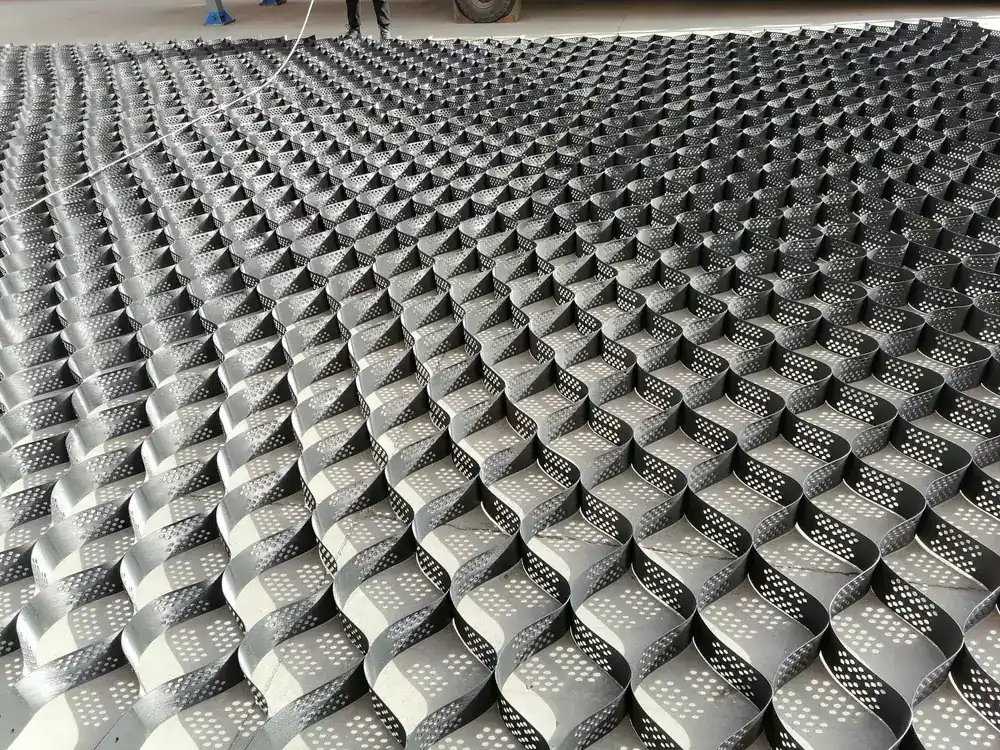
How Geocell Helps Control Erosion
Cell walls confine soil or aggregate and add surface roughness. This can reduce infill movement under runoff and provide a stable space for vegetation to establish. Perforations allow lateral water movement; a filter geotextile may be required over fine-grained subgrade.
- Infill confinement: cells limit lateral movement of soil, aggregate or concrete.
- Surface protection: the cellular profile can help interrupt runoff across the face.
- Vegetation support: topsoil is retained within cells while roots establish.
- Drainage: perforated walls allow water to pass between cells where the design calls for it.
Geocell is not a substitute for slope stability, hydraulic, drainage or anchorage design. Steep slopes and concentrated flows require project-specific engineering checks.
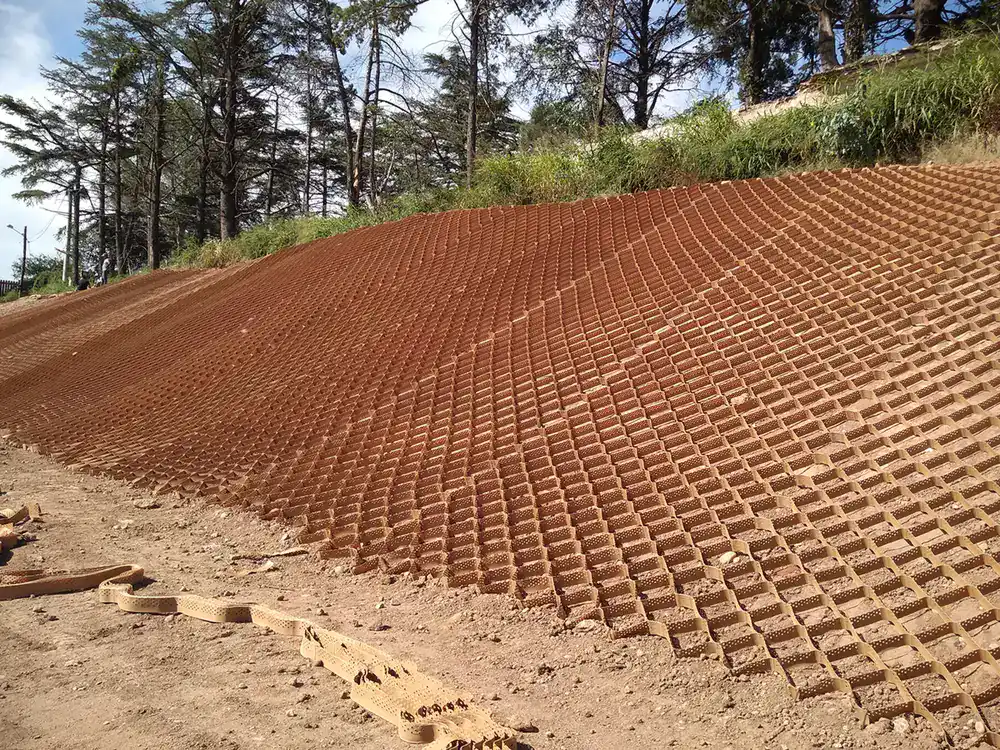
Choosing an Erosion-Control Method
| Method | Typical use | Design checks |
|---|---|---|
| HDPE geocell with infill | Slopes, channel banks and embankments | Anchorage, infill, filter layer and exposure |
| Riprap | High-energy channels and toe protection | Stone sizing and filter compatibility |
| Concrete lining | Conveyance channels and selected steep faces | Cracking and drainage behind lining |
| Erosion-control blanket or geomat | Shallow slopes during vegetation establishment | Flow, slope and limited confinement |
| Vegetation alone | Gentle slopes with suitable growing conditions | Establishment period and concentrated flow |
Methods can be combined, for example geocell on the upper slope and riprap at the toe. Send the slope angle, design flow and proposed infill for a project-specific discussion.
Product Options and Specifications
The following are configurable options reported in GEOROAD product materials. They are examples, not guaranteed values for every order. Confirm the selected model and test requirements against the current datasheet and order-specific Certificate of Quality before specifying.
| Parameter | Listed options | Selection note |
|---|---|---|
| Cell depth | 75, 100, 150 or 200 mm; 300 mm in a dedicated series | Select for infill and design conditions |
| Weld distance | 330, 356, 400, 445 or 660 mm | Relates to expanded cell dimensions |
| Sheet thickness | 1.1 mm smooth / 1.5 mm textured | Confirm model and tolerance on datasheet |
| Surface | Smooth or textured; perforated or non-perforated | Choose for interface and drainage needs |
| Material | HDPE with carbon black | Confirm grade and test values per order |
Example lot test record
The figures below are presented as one lot record, not a guarantee for all models. Verify the original Certificate of Quality before relying on these values. Replace “Eligible” with the actual measured carbon-black value if the source certificate provides it.
| Test item | Unit | Requirement / nominal | Reported result |
|---|---|---|---|
| Material | – | HDPE | HDPE |
| Carbon black content | % | ≥ 2 | Confirm actual result on certificate |
| Seam peel strength | N/10 cm | 1000 | 1092 |
| Sheet thickness | mm | 1.5 | 1.52 |
| Cell depth | mm | 100 | 100 |
| Weld distance | mm | 356 | 356 |
Example record: HDPE Geocell 100-356 mm, report T26051502, dated 15 May 2026. Confirm the report, issuer and all figures against the original certificate before publication.
Surface Selection
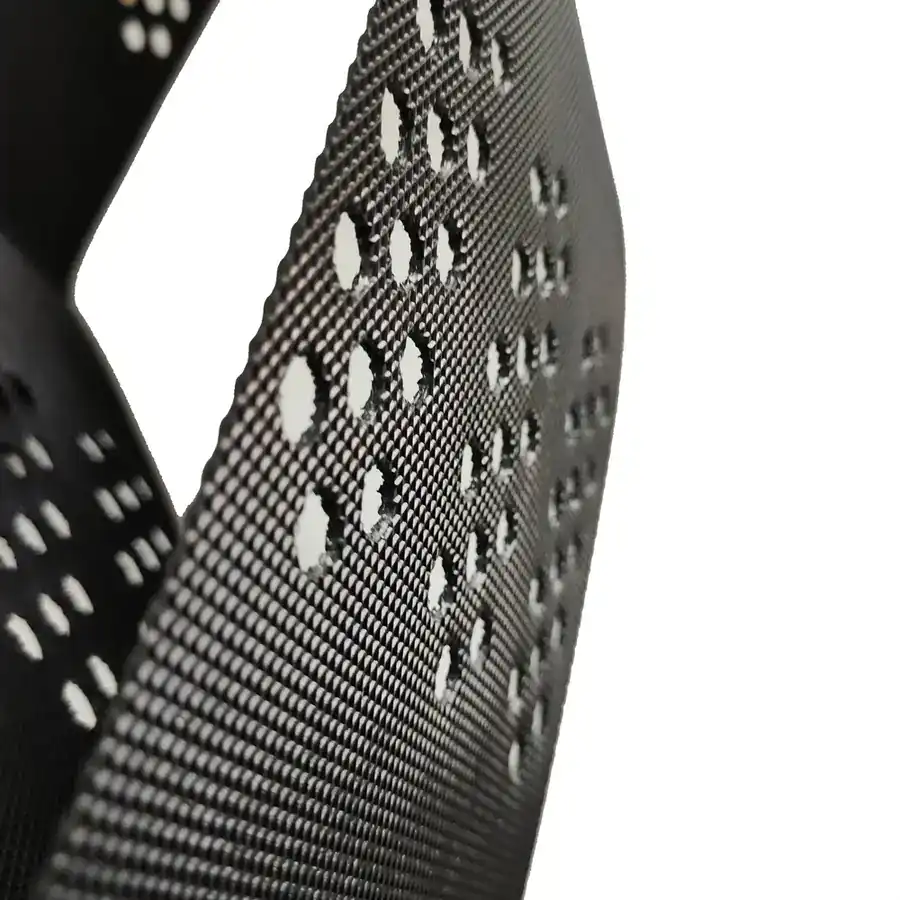
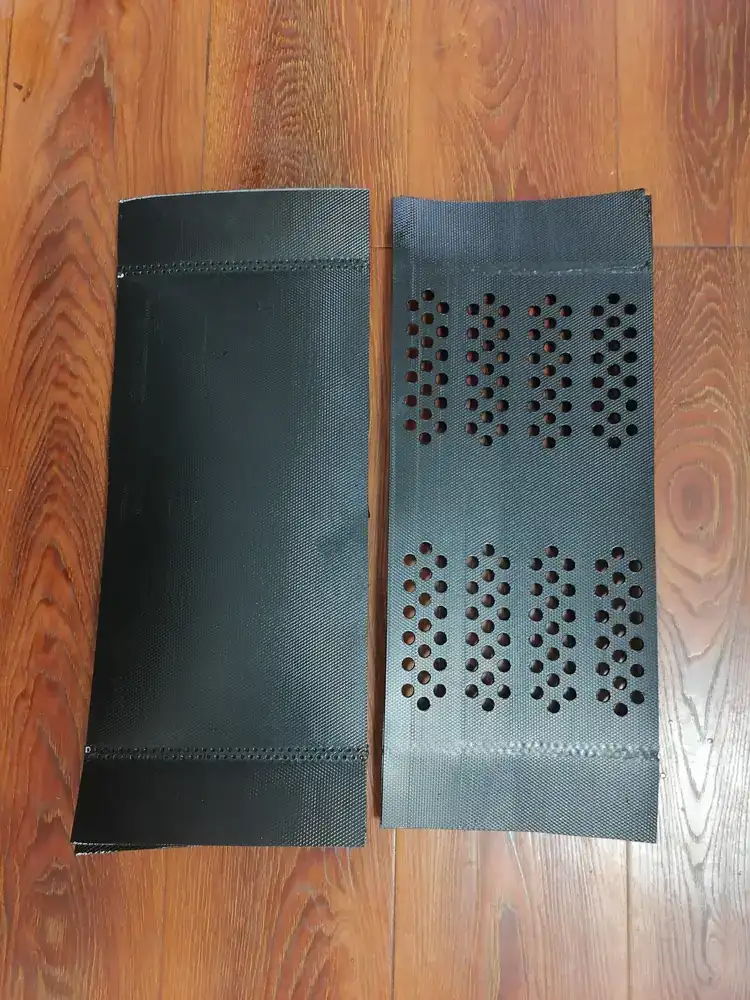
Textured strips are used where added interface friction is required. Perforations support lateral drainage and root passage where specified. Smooth or non-perforated configurations may be appropriate for other infill and project conditions. Confirm the combination with the project designer.
Applications
- Highway and railway cut or fill slopes
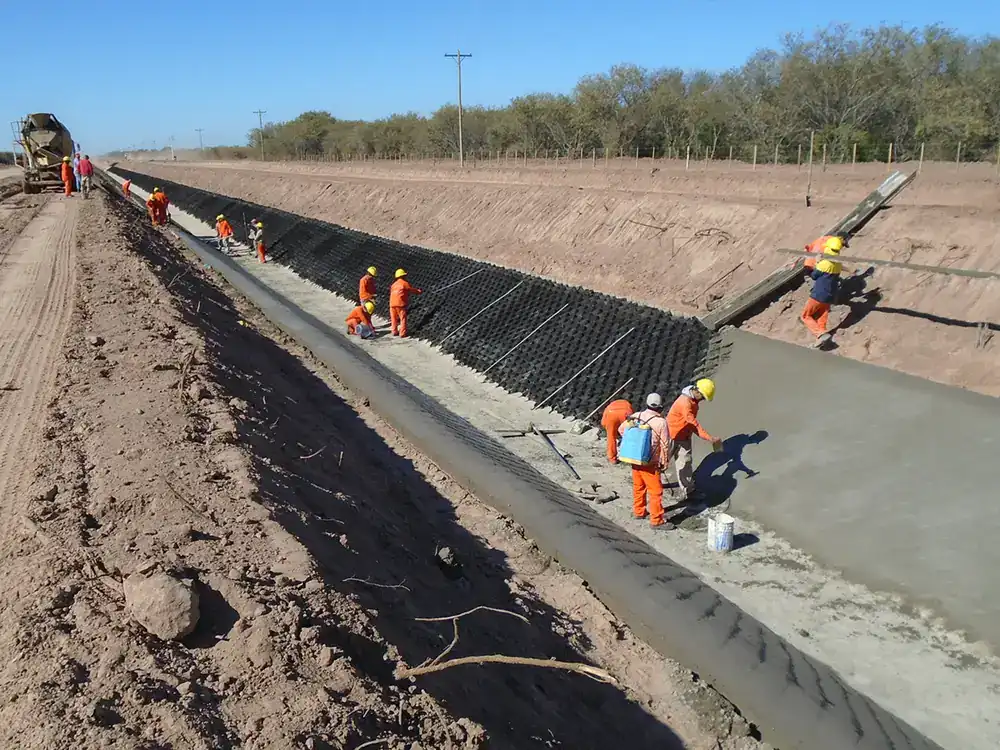
- Channel banks and drainage ditches, with suitable infill
- Dam embankments and landscaped slopes
- Reservoir and shoreline margins subject to project design
- Retaining and steepened faces designed for the intended loads
See the GEOROAD geosynthetics range and geocell product listing. This page focuses on erosion-control selection and application; use the product listing for standard product details.
Installation Overview
- Prepare and grade the subgrade; install a filter geotextile where specified.
- Anchor panels at the crest and edges according to the engineered design.
- Expand panels fully and connect adjacent sections using specified connectors.
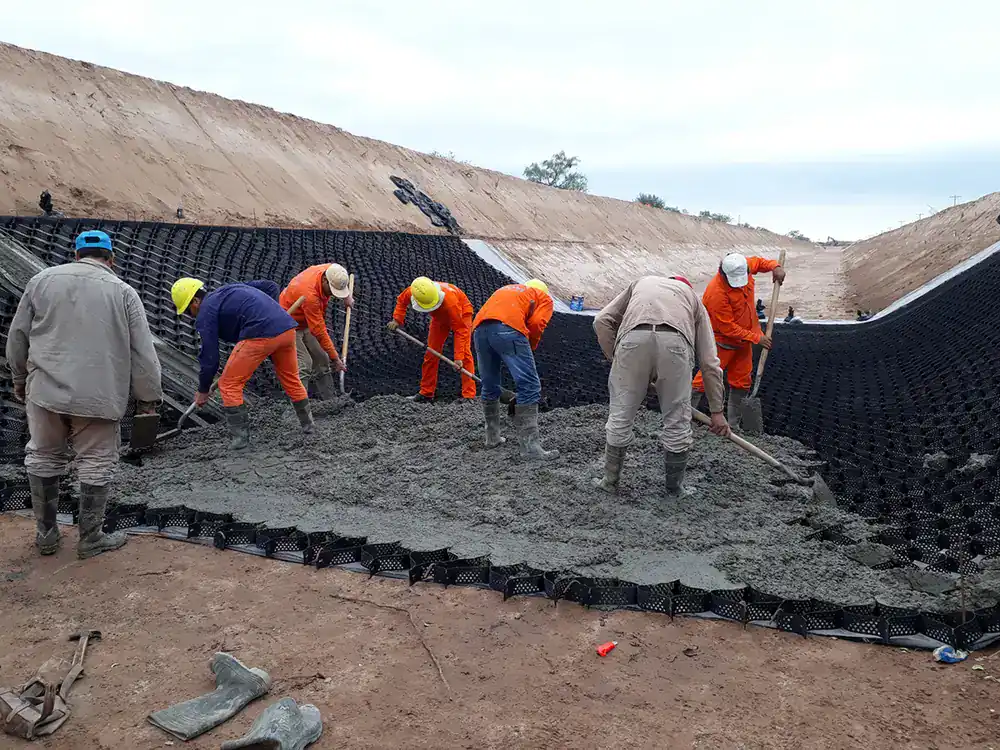
- Place approved infill in stages without folding or damaging cell walls.
- Finish with vegetation, aggregate or concrete as specified.
- Inspect anchors, cell opening and infill after installation and significant rainfall.
Quality Documents
GEOROAD product materials reference ASTM D1505 for polymer density, ASTM D1603 for carbon-black content and ASTM D5199 for sheet thickness. Confirm the applicable test method and acceptance criteria for the selected product and project. Request the current datasheet and lot-specific Certificate of Quality; third-party reports should be confirmed for availability and scope before quotation.
Frequently Asked Questions
What cell depth is suitable for a slope?
It depends on slope geometry, infill, flow and anchorage design. Share the project section and requirements so the configuration can be reviewed.
Should I choose perforated or non-perforated cells?
Perforations may be specified where lateral drainage or root passage is needed. Confirm the choice against the filter layer, infill and design conditions.
Can geocell be used on steep slopes?
Potentially, subject to engineering checks. Anchorage, infill weight, drainage and slope stability must be designed for the project.
Can cells be filled with concrete?
Concrete infill is used in selected channel and ditch applications. Panel anchorage, placement and curing should follow the project specification.
How can I request a quotation?
Send the application, slope angle or design flow, required cell depth, surface type, quantity and destination through our contact page. Ask for the current datasheet and relevant quality documents.
Request a Datasheet and Quotation
For a useful quotation, share the application, project section, flow conditions, infill, preferred cell depth and surface, quantity and destination port. Contact GEOROAD about HDPE geocell for erosion control to discuss the project and request current product information.